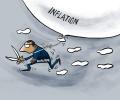
Wholesale price based inflation declined to a 3-month low of 1.89 per cent in November on cheaper food items, and experts predicted a 0.25 per cent interest rate cut by the RBI in the policy review in February. The Wholesale Price Index (WPI) based inflation was 2.36 per cent in October 2024. It was 0.39 per cent in November, last year. In August, 2024, it was 1.25 per cent.

In his first monetary policy review since taking office on September 4, RBI Governor Raghuram Rajan increased the repo rate by 25 basis points to 7.50 per cent.
The Bank Rate (6%), Repo Rate (7.75%) and Reverse Repo Rate (6%) have all been left unchanged in the half-yearly review of the monetary policy on Tuesday.

Amid liquidity tightness in the banking system, certificate of deposit (CD) rates topped 8 per cent for some smaller banks, with rates remaining on the higher side for derivatives loss-hit IndusInd Bank. On Thursday, CSB Bank raised Rs 100 crore via one-year CDs at 8.5 per cent, while Utkarsh Small Finance Bank issued three-month CDs at 8.05 per cent to raise Rs 50 crore.
.jpg)
Industry's demand for a reduction in the repo rate, currently 8 per cent, has gained momentum after wholesale and retail inflation eased in February.
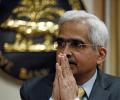
The Reserve Bank on Wednesday increased the benchmark lending rate by 40 basis points (bps) to 4.40 per cent in a bid to contain inflation, which has remained stubbornly above the target zone of 6 per cent for the last three months. The decision follows an unscheduled meeting of the Monetary Policy Committee (MPC), with all six members unanimously voting for a rate hike while maintaining the accommodative stance. While the inflation has remained above the targetted 6 per cent since January, RBI Governor Shaktikanta Das said the inflation print in April is also likely to be high.

State Bank of India (SBI) on Monday raised its benchmark lending rates by up to 50 basis points (or 0.5 per cent), a move that will lead to an increase in EMIs for borrowers. The increase in lending rate comes days after the Reserve Bank of India hiked its benchmark lending rate by 50 basis points to tame inflation. External Benchmark based Lending Rate (EBLR) and Repo-Linked Lending Rate (RLLR) have been raised by 50 basis points while the hike in Marginal Cost of funds-based Lending Rate (MCLR) is 20 basis points across all tenure.

The fourth consecutive rate cut is expected to lower equated monthly instalments (EMIs) for home and auto buyers, and borrowing cost for corporate.
The Reserve Bank is likely to maintain status quo on interest rates in its forthcoming monetary policy review but may change the stance in view of retail inflation piercing its upper tolerance limit, global uncertainties created by the ongoing Russia-Ukraine war, and the urgency to protect and boost growth, feel experts. The RBI governor-headed rate setting panel -- Monetary Policy Committee (MPC) -- will be holding its first meeting of the 2022-23 fiscal from April 6 to 8. The outcome will be announced on April 8.

The central bank might raise repo and reverse repo rates by 25 basis points each, they said. Still, RBI action would be conditional on its ensuring sufficient liquidity in the banking system.

The Reserve Bank of India (RBI) on Wednesday raised the benchmark lending rate by 35 basis points to 6.25 per cent in a bid to tame inflation, which has remained above its tolerance level for the past 11 months. With the latest hike, the repo rate or the short-term lending rate at which banks borrow from the central bank now has crossed 6 per cent. This is the fifth consecutive rate hike after a 40 basis points increase in May and 50 basis points hike each in June, August and September.

'Banks are being encouraged to lend instead of parking their resources with the RBI and earn risk-free interest income,' points out Tamal Bandyopadhyay.

The Reserve Bank of India on Thursday kept the benchmark interest rate unchanged at 4 per cent and decided to continue with its accommodative stance against the backdrop of an elevated level of inflation.

'Given the lag in transmission, further softening of lending rates may happen in the coming months.'

A day after the Reserve Bank of India's (RBI's) Monetary Policy Committee hiked the policy repo rate by 50 basis points (bps), several commercial banks, including ICICI Bank and Bank of Baroda, raised their external benchmark-linked loan rates by an equal amount on Thursday. HDFC, the country's largest mortgage lender, too, increased its interest rates on housing loans by another 50 bps. In total, it has raised rates by 85 bps since May 4, when the RBI had increased the repo rate by 40 bps in an off-cycle meeting.

Housing demand should improve nationwide after the Reserve Bank of India (RBI) cut the repo rate by a larger-than-expected 50 basis points (bps) on Friday, said real estate industry executives. The rate cut comes after housing sales in top Indian cities in the first quarter of 2025 dipped 28 per cent due to skyrocketing residential property prices and geopolitical headwinds, according to Anarock.

RBI Governor Raghuram Rajan asked banks to follow suit and pass on the rate cuts.

In the mid-year monetary policy review on Tuesday, RBI, left the key interest rate unchanged but reduced cash reserve ratio by 0.25 per cent to infuse additional liquidity of up to Rs 17,500 crore (Rs 175 billion) into the system.
The imported inflation component is also expected to ebb on lower oil prices and softer US dollar, it said.

The rupee continued to face pressure in the first half of the current financial year (FY26), hitting fresh lows against the dollar, due to strengthening of the greenback, rising crude oil prices, and foreign outflows. Rupee has depreciated by 3.7 per cent so far in the current financial year after starting at a good note in April.

The three day MPC meeting began on Monday and the decision will be announced on Wednesday by RBI Governor Shaktikanta Das.

RBI, in its first bi-monthly monetary policy statement, left the short-term lending rate, or repo rate, unchanged at 8 per cent and the cash reserve ratio static at 4 per cent.

In its policy review meeting on Tuesday, the Reserve Bank of India hiked interest rates by 25 basis points.
Discuss how high inflation and interest rates are impacting you with Senior Associate Editor (Business)Faisal Kidwai.

The disruptions caused by COVID-19 have more severely impacted small and mid-sized corporates, including NBFCs and MFIs, in terms of access to liquidity.
Concerned over surging inflation, Reserve Bank of India hiked the short-term repo rate on Wednesday by 0.25 per cent to 7.50 per cent while keeping reverse repo, bank rate and cash reserve ratio unchanged.

Striking a different note from its peers, US brokerage Bank of America Securities has maintained that the Reserve Bank will leave rates unchanged next week, recognising growth-focused and capex-driven fiscal expansion, which though poses huge price pressure and interest rate risks later. The RBI's rate setting panel Monetary Policy Committee (MPC) will begin its deliberations next Monday and announce the policy moves on Wednesday (February 9) in the backdrop of a massive spike in bond yields post the Budget. Almost all major central banks are in the process of hiking rates to tame inflation.

Reserve Bank of India Governor Urjit Patel on Saturday exhorted banks to reduce their lending rates to push credit demand in laggard segments, saying banks have benefited from influx of low-cost deposits and its previous repo rate cuts.

Ahead of the Reserve Bank of India's (RBI's) monetary policy review in the first week of December, major public sector non-banking financial companies (NBFCs) - the National Bank for Agriculture and Rural Development (Nabard), Small Industries Development Bank of India (Sidbi), Power Finance Corporation (PFC), and Indian Railway Finance Corporation (IRFC) - plan to raise up to Rs 24,000 crore together through bond issuancesk.

Reserve Bank Governor Shaktikanta Das on Wednesday said the decision to tweak policy rates was not in his hand as he himself is driven by the situation on the ground. In April, the Reserve Bank in a surprise move hit the pause button and decided to keep the key benchmark policy rate at 6.5 per cent. Prior to it, the Reserve Bank of India (RBI) was on a rate hiking spree, raising the repo rate by 250 basis points since May 2022.
Ahead of RBI's monetary policy review, SBI on Monday expressed hope the apex bank will cut interest rates by 0.5 per cent and CRR by up to one per cent to boost sagging growth.

The bank kept cash reserve ratio unchanged at 6 per cent.

'Growth, liquidity and deposit mobilisation are likely to be discussed during the interaction.'
.jpg)
Bank has cited trend of global easing and weak growth
Exactly a fortnight ahead of the Reserve Bank of India's (RBI's) next monetary policy review, a key market indicator of interest rates - the overnight indexed swap (OIS) - suggests that the central bank may tighten policy by 35 basis points and then refrain from further rate hikes. RBI Deputy Governor Michael Patra recently described the OIS as the primary instrument for hedging interest rate risk in India. The six-member Monetary Policy Committee (MPC) of the RBI will meet on December 5-7.
The Reserve Bank of India on Wednesday evening increased the repo rate -- the rate at which the central bank's lends short-term money against government securities to banks -- by 25 basis points to 8 per cent.

High interest rates have been discouraging fresh investments and dragged industrial production down for nearly two years now.
Two days after the repo rate cut, the Reserve Bank of India governor Bimal Jalan on Monday said the soft interest rate bias will continue.

The RBI has set up a panel to review ATM charges, and fees levied by banks.
